
Kontakaika Village, Samos – Traditional Mountain Village near Karlovasi
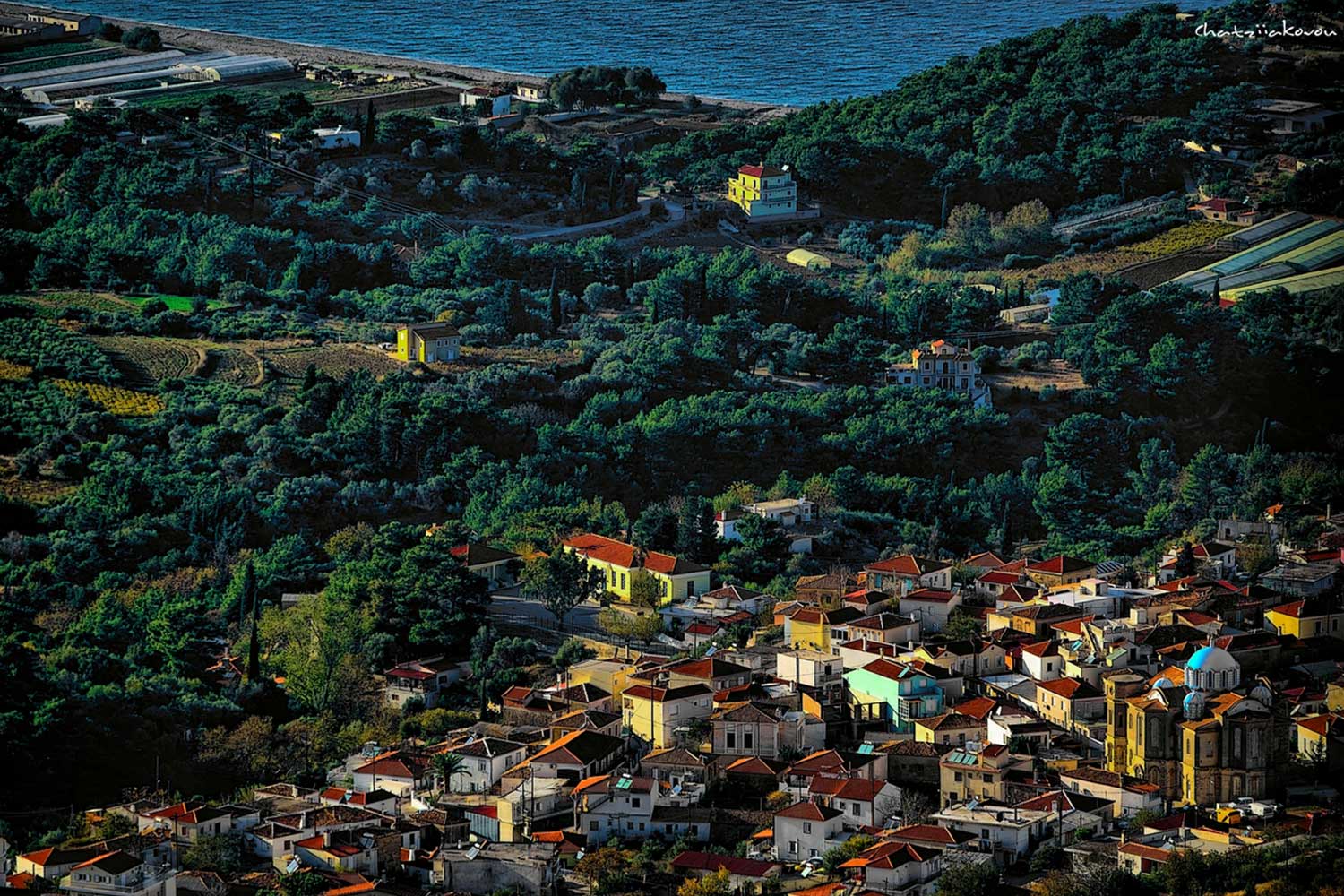
🏞️ Outstanding Views & Location
The village of Kontakaika is located on the northwestern foothills of Mount Ampelos (Karbounis) and offers impressive views from the northeast to the northwest, towards the Aegean Sea, Karlovasi, the opposite coasts of Asia Minor and, when weather conditions allow, even towards the island of Chios.
🌄 Traditional Settlement & History
The village is old and picturesque, with traditional lifestyle and history dating back to the 18th century. Its traditional character, stone-paved streets, old houses and agricultural way of life give the area an authentic atmosphere.
📍 Nearby Attractions
Kastrovouni:
At an altitude of about 900 meters, there are the ruins of an old castle with cisterns and fortifications, ideal for nature lovers and hikers.
Church of the Dormition of the Virgin Mary & Agios Georgios:
Traditional churches with interesting history and local significance.
Agios Nikolaos – Small Harbor:
A small seaside resort with a beach, a tavern serving fresh fish and a pleasant atmosphere.
🍇 Agrotourism & Local Products
The local economy is based on agriculture — with fruits and vegetables such as watermelons and tomatoes famous for their quality — as well as olives and vineyards. This means that visitors can taste local products and homemade flavors.
🚶♂️ Walks & Tranquility
The village and the surrounding area are ideal for peaceful walks, hiking routes and exploring nature, far from the busy tourist crowds.
📍 Access
Kontakaika is located about 28–29 km from Vathy and 5 km from Karlovasi, making it an ideal choice for a day trip or for a quiet stay in the interior of Samos.
🏞️ Location & Views
Kontakaika is located in the northwestern part of Samos, on the foothills of Mount Ampelos (Karbounis), at an altitude of approximately 162 meters. Its location is ideal, as it combines the tranquility of the countryside with easy access both to Karlovasi (only 5 km away) and to the island’s capital, Vathy (about 28 km).
From many points of the village, the view is impressive and open towards the Aegean Sea. The view stretches over the Gulf of Karlovasi towards the opposite coasts of Asia Minor, while on clear days even Chios can be seen on the horizon. The sunset from Kontakaika offers unique colors in the sky and is by itself a reason for an afternoon walk in the village.
The surrounding area is lush and green, with olive groves, vineyards and cultivated fields, while the mountainous landscape of Karbounis creates a natural setting ideal for relaxed nature walks, photography and quiet moments away from the noise of tourist centers.
🏺 History & Origin of the Name
The history of Kontakaika is closely connected to the major population movements that Samos experienced during the period of piracy and political upheavals in the Aegean. Like many other villages on the island, it was founded or significantly strengthened when inhabitants sought safer, more mountainous areas, away from the coasts that were vulnerable to raids.
The most widely accepted version regarding the origin of the village’s name is that it comes from a family or surname, most likely from an early settler or a prominent family with the surname “Kontakas” or a similar variation. Thus, the settlement became known as the place of the “Kontakaioi”, which over time evolved into Kontakaika or Kontakeika.
During the period of the Principality of Samos (19th century), Kontakaika developed into an organized agricultural settlement, with significant production and a stable population. Its location, close to fertile lands and near important road routes leading to Karlovasi, helped it grow both economically and socially.
Gradually, the village developed a strong community life, with churches, a school and local institutions that shaped the character of a close-knit society, where family ties and cooperation played a key role in the daily life of the residents.
🏡 Traditional Architecture & Neighborhoods
Kontakaika largely preserves the traditional character of a Samian rural village, with low houses, stone walls and tiled roofs that follow the natural slope of the terrain. The architecture is simple, functional and fully adapted to the needs of agricultural life and the local climate.
Most of the older houses are two-storey buildings, with storage rooms and stables on the ground floor and living areas on the upper floor. The courtyards, often paved with stone or earth, host grapevines, basil plants and small vegetable gardens, creating small green “oases” within the settlement.
The village is divided into neighborhoods that developed around family clusters. Narrow streets and stone-paved paths connect the houses in a natural way, without strict urban planning, giving the village authenticity and a sense of a “living” settlement, where everything is close and easily accessible on foot.
In several spots, one can find old stone-built houses that are still inhabited or have been renovated while preserving their traditional features, such as wooden frames, stone lintels and small balconies with views over the valley and the surrounding mountains.
A walk through the village is an experience in itself: quiet streets, flower-filled courtyards, cats basking on doorsteps and scenes of everyday life that recall another, slower and more human-paced era.
🌿 Nature & Walks Around the Village
The area around Kontakaika offers ideal conditions for gentle walks in nature, with rural roads, small paths and olive groves spreading across the slopes of Mount Karvounis. The landscape is lush and green in spring, with blooming wildflowers, scents of thyme and sage, and views opening out toward the valley and the surrounding villages.
Residents have been using the same rural roads for decades to reach their fields, which also makes them perfect for relaxed walking without particular difficulty. The routes pass among olive trees, small vineyards and old stone-built animal shelters, offering an authentic picture of the Samian countryside.
In many spots, visitors can stop and enjoy views toward Karlovasi and the northwestern part of the island, especially in the late afternoon when the light softens and the colors of the landscape become warmer. Sunset from the higher points around the village offers very beautiful opportunities for photography.
During spring and autumn, temperatures are ideal for walking, while in summer, strolls early in the morning or late in the afternoon offer coolness and tranquility away from the crowds of the beaches. The area is also suitable for visitors who simply want a relaxed walk in nature without intense hiking.
Contact with the natural environment, the sounds of birds and the calmness of the area make walks around Kontakaika ideal for those seeking a quieter and more authentic side of Samos, far from the main tourist centers.
⛪ Churches & Local Chapels
In Kontakaika and the surrounding area, one can find small churches and chapels that form an important part of the village’s daily life and tradition. These sites are not only places of worship, but also gathering points for residents during feasts, festivals and local celebrations.
Most churches follow the simple, folk architecture of Samos, with stone walls, tiled roofs and modest exterior decoration. Inside, however, they often hide remarkable icons, wooden icon screens and elements that testify to the long religious history of the area.
Around the village, in farmland and on low hills, there are small chapels built by families as offerings or expressions of gratitude. Many of them open only on their feast days, when residents gather for a service and often a small celebration follows with food and music.
Religious festivals are a living part of the village’s social life and offer visitors an authentic experience of local customs. These are moments when the village truly “comes alive”, with people of all ages actively taking part.
For those interested in quiet visits, churches and chapels also provide places of peace and rest, ideal for a stop during a walk or a stroll in nature, far from the noise and intensity of the more tourist-oriented areas.
🍽️ Local Flavors & Traditional Products
The local cuisine in Kontakaika is directly connected to agricultural production and the residents’ self-sufficiency. Many of the products consumed in the village come from small family gardens, olive groves and vineyards, preserving traditional production methods to this day.
Olive oil is a basic element of the local diet and is used in almost all cooking. Olives are harvested in autumn, and many families still produce their own oil, which stands out for its taste and aroma.
Wine production is also important, either in small quantities for family consumption or in cooperation with local wineries of western Samos. Samian wine, internationally known for its aromatic characteristics, accompanies most meals and local celebrations.
In village homes, one can find traditional recipes such as vegetable dishes cooked in olive oil with seasonal produce, legumes slowly simmered, pies filled with wild greens and homemade bread. Spoon sweets made from local fruits also hold a special place, along with traditional desserts offered during feasts and festivals.
Livestock farming, although more limited compared to the past, still provides local cheeses and dairy products, mainly for family use. Fresh cheese, yogurt and eggs are basic elements of daily nutrition.
For visitors, the gastronomic experience in Kontakaika is not found in large tavernas or tourist menus, but in the simplicity and hospitality of the residents. Often a glass of wine, a few olives, bread and cheese are enough to understand the philosophy of local life: simple, good and authentic.
🚗 Access & Distances from Key Points of Samos
Kontakaika is located at a strategic point in northwestern Samos, and access to the village is easy via the provincial road network that connects the main towns and ports of the island.
The distance from Karlovasi is about 5 kilometers, which makes the village particularly convenient for those staying in or arriving from the local port. The route is short and follows a gently sloping road with nice views toward the foothills of Mount Karvounis.
From the town of Samos (Vathy), Kontakaika is approximately 28 kilometers away. The route crosses mountainous and semi-mountainous landscapes, offering beautiful views of the island’s interior, and takes about 40–45 minutes by car.
Pythagorio, where Samos International Airport is located, is about 40–45 kilometers away. Access is via the main road artery connecting the southern and northern parts of the island, and the drive takes about one hour, depending on traffic.
Due to its short distance from Karlovasi, Kontakaika is a good base for exploring western Samos, both for beaches and for mountain routes, traditional villages and natural attractions. The presence of regular bus routes to and from Karlovasi also helps visitors without a car, although for full freedom of movement the use of a private vehicle is recommended.
🏖️ Beaches Near Kontakaika
Although Kontakaika is not a seaside village, it is located a short distance from several of the most well-known and beautiful beaches of western Samos, which makes it an ideal base for peaceful holidays with easy daily trips to the sea.
At a distance of about 10–15 minutes by car is Potami Beach, one of the most popular beaches in the area, with pebbles, clear waters and impressive natural scenery. Very close to the beach begin the paths leading to the famous Potami Waterfalls, offering a great combination of swimming and hiking.
A little further west, near Karlovasi, are the beaches of Mikro and Megalo Seitani, two wild and impressive pebble beaches with strong waves, ideal for those who love more “untouched” landscapes. Access is via hiking from specific points, which makes them less crowded and particularly attractive to nature lovers.
At a short distance are also Tsamadou and Lemonakia beaches, more organized, with sand and fine pebbles, beach bars and easy access. They are ideal for families as well as for those who want comfort without moving too far from the village.
Thanks to its geographical position, Kontakaika allows visitors to choose a different type of beach every day — from calm and organized to wild and secluded — without long travel distances.
🧭 Attractions & Excursions in the Surrounding Area
The area around Kontakaika offers many options for small excursions, combining nature, history and traditional settlements, ideal for day trips.
Very close by is Karlovasi, one of the largest towns of Samos, with strong neoclassical character, old tanneries, picturesque small harbors and a lively market. It is also worth visiting the University of the Aegean and the old neighborhoods of the town that reflect its commercial prosperity in the past.
For nature lovers, the Potami Waterfalls are among the most popular natural attractions of the island. The route combines easy hiking through a lush green gorge and ends at natural pools with running water, ideal for a refreshing swim during the summer months.
To the east and south, at a longer but comfortable distance, are Pythagorio and the Heraion, two of the most important archaeological sites of Samos and UNESCO World Heritage Monuments. Pythagorio combines archaeological interest with tourist activity, a picturesque harbor and plenty of dining options.
The wider area is also suitable for mountain routes and villages with traditional character, such as small settlements on the foothills of Mount Karvounis, where visitors can experience more authentic images of the Samian countryside, far from tourist crowds.
🏛️ Historical & Cultural Sites of Kontakaika
Kontakaika is a village with a long historical presence, closely connected to agricultural life and its strategic location on the foothills of Mount Karvounis. The area has been inhabited for centuries, as it combined natural protection from raids, access to fertile land and sufficient water resources.
In the village and the surrounding area, one can find traditional churches and small chapels, which are important reference points for the local community. These churches, built in folk architectural style, preserve icons and elements that testify to the religious and cultural continuity of the place.
An important part of the village’s cultural identity is also its oral tradition, with stories passed down from generation to generation and connected to everyday agricultural life, old professions and the hardships faced by residents in earlier times.
At a short distance from Kontakaika there are also monuments and historical sites of western Samos, which can easily be combined into cultural routes, offering visitors a more complete picture of the history and evolution of the area.
🎉 Local Festivals & Celebrations
As in many villages of Samos, in Kontakaika too, festivals and religious celebrations play an important role in the lives of the residents and are an opportunity for gathering both locals and visitors.
During the summer as well as on major religious feast days, the village comes to life with traditional music, local dances and shared meals, where homemade dishes, local wine and traditional sweets dominate. These festivals retain their authentic character and do not have the mass tourist nature found in more crowded places.
Family celebrations, such as weddings and baptisms, are also of special importance and are often accompanied by open feasts that bring together people from nearby villages, strengthening the bonds between communities.
These events offer visitors a unique opportunity to experience the everyday, authentic side of Samian life, to connect with the locals and to enjoy local hospitality away from purely tourist patterns.
🏨 Accommodation in Kontakaika & the Surrounding Area
There are no large hotel units in Kontakaika, which helps preserve the quiet and authentic character of the village. However, in the wider area, and especially towards Karlovasi and the seaside villages of western Samos, there are several accommodation options such as small hotels, rental rooms and tourist apartments.
Many visitors choose to stay near the sea and visit Kontakaika for walks, meals and contact with local life. The short distance from Karlovasi makes the village an ideal destination for those who want to combine mountain and sea in the same day.
For those who prefer quieter holidays, there are also traditional houses in the wider area available for short-term rental, offering a stay experience closer to the everyday life of the residents.
🧑🌾 Everyday Life & Agricultural Tradition
Daily life in Kontakaika is inseparably connected to the land. Many residents continue to work in olive groves, vineyards and vegetable gardens, maintaining practices that are passed down from generation to generation.
During autumn and winter, the olive harvest is a central part of village life and is accompanied by family labor and social interaction. In summer, courtyards and cafés fill with people, conversations and small daily rituals that give the village its familiar, human rhythm.
The residents are friendly and willing to talk with visitors, share stories and offer advice about the surrounding area, providing an experience that is hard to find in more tourist-oriented places.
📸 What Is Worth Photographing in the Village
Kontakaika offers many small but authentic scenes for those who love photography and quiet walks. The narrow alleys, old stone houses and flower-filled courtyards create ideal frames, especially in the afternoon when the light becomes warmer.
Particularly interesting are the spots with views toward the valley and the surrounding slopes of Mount Karvounis, where one can capture the natural landscape in different seasons of the year. In spring and autumn, the colors of nature add special vibrancy to the images.
It is also worth capturing moments of everyday life, such as elderly people chatting in cafés, agricultural work in the surrounding fields or children playing in the neighborhoods—elements that reflect the authentic character of the village.


Add new comment