
Driver of Samos
✨ Tourist & Business Guide ✨
Castle of Lykourgos Logothetis – Fortress of Freedom and History
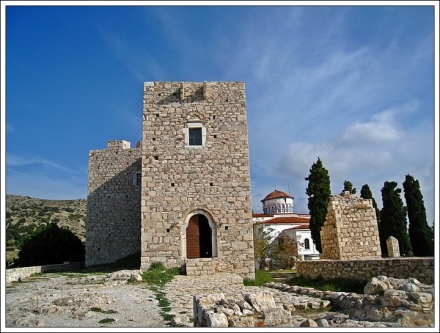
🏰 Castle of Lykourgos Logothetis
Standing silently and imposingly atop the hill of Pythagoreio, the Castle of Lykourgos is a living monument spanning three millennia: ancient Samos, Byzantine Samos, and revolutionary Samos of 1821. Originally built by the Byzantines, the castle came back to life through the leadership of Lykourgos Logothetis, the political and military leader of the Greek Revolution on the island.
📍 Location
- In Pythagoreio, on an elevation above the harbor and town
- Easily accessible on foot from the village center
- Surrounded by archaeological remains, the Church of the Transfiguration of the Savior, and the ancient acropolis
Distances:
| From | Distance | Time |
|---|---|---|
| Pythagoreio center | ~300 m | ~5 min walk |
| Samos Airport | ~3 km | ~5 min drive |
| Samos Town | ~14 km | ~20 min drive |
📜 Historical Context
The castle was initially built in the late 7th century AD to protect inhabitants from Arab raids. Over the centuries, it underwent additions and modifications:
- 10th century – Repairs under Emperor Nikephoros Phokas
- 14th century – Reinforcements by Genoese rulers
- 16th century – Additions for cannon defense
- 1824 – Reconstructed by Lykourgos Logothetis during the Greek War of Independence
Lykourgos Logothetis (real name: Georgios Paplomatas) became the political and military leader of Samos. With the people's support, he transformed the old fortress into a revolutionary headquarters and administrative center.
🧱 Architectural & Fortification Features
- Total length: 400 meters
- Built from stone with battlements, over earlier archaeological foundations
- Raised ground floor and two upper levels
- No windows on the ground floor for defense
- Main entrance with machicolation above it
- Gunports and cannon stations added in later phases
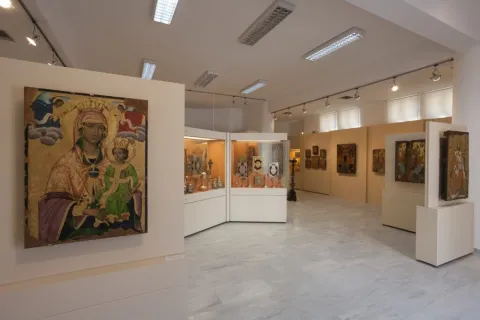
- Today: fully restored, houses archaeological museum and exhibition areas
✝️ Church of the Transfiguration of the Savior
Beside the main tower, Logothetis built this church in 1831 or 1833, commemorating the Samians' naval victory against the Turkish fleet at the Battle of Mycale (5 August 1824).
Modest but majestic, the church remains a landmark of historical and religious significance.
🏛️ The Castle Today
- Open to the public as a monument
- Hosts exhibition spaces with antiquities and historical artifacts
- Offers panoramic views of the Aegean and Pythagoreio
- Entry is via museum hours and ticketed access
📷 Suggested Photos
| Theme | Description |
| 🏰 Castle exterior | From the entrance path |
| 🏛️ Interior walls | With battlements and views |
| ⛪ Church of the Transfiguration | Overlooking the sea |
| 🌅 View toward Pythagoreio | From the hilltop |
| 🖼️ Museum exhibits | Archaeological & historical finds |
❤️ Why Visit the Castle of Lykourgos?
✅ It is the most complete historical monument of modern Samos
✅ It unites all periods of the island's history
✅ It offers views, culture, and emotion
✅ It is the birthplace of Samos' revolutionary identity
ℹ️ Additional Information
The castle is 400 meters long and built from stone. Thanks to its elevated position, visitors enjoy expansive views of the sea and Pythagoreio. Near the fortress stands the Church of the Transfiguration and remains of ancient structures revealed through excavation.
The Byzantine fortress was originally built on the site of the ancient Samian acropolis in the late 7th century, during a time of increasing piracy in the Aegean. It was abandoned in 1475 after the island's capture by the Ottomans.
The Tower of Logothetis reflects four distinct construction phases:
- 10th century – Repairs under Nikephoros Phokas
- 14th century – Genoese modifications
- 16th century – Reinforcements with cannonports and stations
- 1824 – Complete renovation by Logothetis; new entrance and windows added
Thus, the old fortress was revived when Lykourgos Logothetis initiated the reconstruction of the site (1824–1827), with the support of the Samian people.
The tower became both his mansion and the island's administrative center.
At the summit, Logothetis built the historic Church of the Transfiguration (1831 or 1833), in remembrance of the victory against the Ottoman fleet at the Battle of Mycale (5 August 1824).
Lykourgos Logothetis (1772–1850), born Georgios Paplomatas, served as a "logothetis" (secretary) to the rulers of Moldavia and Wallachia, and was initiated into the Filiki Eteria. Due to his revolutionary activity, he was sentenced to death and bounty was placed on him by the Ottomans. At the outbreak of the Greek War of Independence, he returned to Samos, where he was welcomed as a hero by the Karmanioloi political faction and proclaimed leader of the island.
Logothetis ruled from the castle until 1834, when he was exiled with fellow revolutionaries after the island failed to be included in the new Greek state and was placed under semi-autonomous Principality status. The castle was then seized by Ottoman forces, and many antiquities inside were looted. By 1840, the tower was abandoned. In 1863, it was sold to the Samian government by his son Alexandros Logothetis.
🪜 Structural & Architectural Notes
- Elevated ground floor, two stories above
- Battlements on top level for defense
- No windows on ground floor (security)
- Entrance with machicolation above
- Fully restored and open as museum today



Add new comment