🏞️ Vourliotes of Samos
Historical and Cultural Background
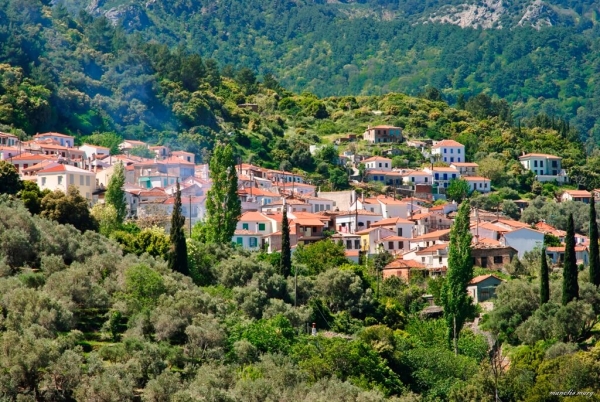
Vourliotes is located in the central-northern part of the island of Samos, at an altitude of 340 meters, on the slopes of Mount Ampelos. The village is situated approximately 19 kilometers northwest of the town of Samos.
Vourliotes is one of the villages that were established around 1600, during the repopulation of Samos by the Ottoman Empire following a long period of abandonment (approximately 1470–1570). A written description of the village is attributed to Ioseph Georgirinis, dating to 1677. Georgirinis mentions that it was a colony of Vourla, a small town near Smyrna (modern-day Izmir), which is best known as the birthplace of the poet Giorgos Seferis. At that time, the village had around one hundred houses and a church. The main occupation of the residents was logging, as the area was covered by forests with trees suitable for construction and shipbuilding. He also mentions the nearby Panagia Vronta Monastery.
In 1702, the famous French traveler and botanist Joseph Pitton de Tournefort passed through Vourliotes and was hosted at the Vronta Monastery for three days during a storm.
By the late 19th century, Vourliotes had 388 houses and 1,476 inhabitants, according to Epaminondas Stamatiadis, who also refers to the village’s foundation history. He notes that the first settlers, arriving from Vourla, initially founded a settlement in Palaiochori (now located above Kambos Vourlioton), but due to pirate threats, they relocated to the current site of the village. However, the area had already been inhabited prior to the depopulation of Samos.
A number of surrounding settlements originated from the gradual expansion of Vourliotes, as the inhabitants increasingly turned to viticulture, spreading toward the plain and the sea, which allowed for the transport of their wine. During the period of the Samos Principality (1834–1912), several of these settlements formed the Municipality of the Six Neighborhoods: Agios Konstantinos, Valeontades, Manolates, Stavrinides, Nenedes, and Margarites.
The following section will present the modern-day village, local experiences, recommendations, and practical travel information.
🌿 The Village Today
Vourliotes has preserved its traditional character to this day, with narrow cobbled alleys, stone-built houses with tiled roofs, small squares shaded by plane trees, and taverns offering authentic Samian cuisine.
The village is surrounded by dense pine forests and vineyards, and from several points offers panoramic views of the Aegean Sea. It is also close to popular hiking trails and natural attractions, such as the Neraida Waterfall and the Monastery of Vronta.
📊 Population Evolution
After the union of Samos with Greece in 1912, Vourliotes remained an important center of the island, along with its dependent settlements: Avlakia, Kambos Vourlioton, and the Vronta Monastery.
Although the permanent population has decreased over time, the village comes back to life in the summer, with the return of expatriates and increased visits by hikers, nature lovers, and travelers in search of something authentic and peaceful.
📍 Location & Distances
Vourliotes is located in the central-northern part of Samos, at an altitude of 340 meters, built on the lush slopes of Mount Ampelos. It is one of the most easily accessible mountain villages on the island.
🚗 19 km from the town of Samos (Vathy)
🚗 15 km from Karlovasi
🏖️ 4 km from Tsamadou Beach
🛫 37 km from Samos International Airport
🏞️ 3 km from the Monastery of Vronta
🌟 The Experience
Vourliotes is a village for those who want to stay a little longer — not just pass through. It is an ideal destination for:
📷 Photographic walks through alleys full of flowers
🥾 Hikes in pine-covered trails starting from the village
⛪ Spiritual pause with a visit to the historic Monastery of Vronta
🍷 Tasting local wine, produced from the area’s own vineyards
Here, visitors won’t find bars or crowds — they will find nature, stone, silence, and hospitality. A village that speaks softly — and captures your heart because of it.
🗺️ Suggested Activities
🥾 Hiking from Vourliotes to the Monastery of Vronta (~40 min on foot)
🚗 Scenic route through Kambos Vourlioton with vineyards and beekeeping spots
🏖️ Swimming at nearby beaches like Tsamadou or Avlakia
⛪ Visit to Agios Georgios Vourlioton – a characteristic village church
🍷 Stop at a local winery or wine cellar for tasting
🍽️ What to Try
🥘 Homemade local dishes at the “Galazio Pigadi” tavern
🧀 Traditional cheeses, trahana, wild herbs
🍞 Wood-fired bread and local rusks
🍷 The well-known sweet Samos wine
🍯 Honey and olive oil from family producers
📸 Best Photo Spots
The main square with the stone fountain and tall plane trees
The upper part of the village with a view of the Aegean
The traditional alleys with colorful doors and flowerpots
The pine-covered path from Vourliotes to Moni Vronta, especially during sunset
🏷️ Village Highlights
🏔️ Traditional mountain settlement
🏚️ Authentic Samian architecture
🌲 Dense forest and vineyards
🍇 Strong viticulture tradition
🛖 Historical and cultural continuity
🧘 Perfect for slow tourism & nature lovers
📊 Population Evolution
After the union of Samos with Greece in 1912, Vourliotes remained a significant center on the island, along with its satellite settlements Avlakia, Kambos Vourlioton, and the Monastery of Vronta.
Although the permanent population has declined, the village comes alive again every summer with the return of emigrants and the arrival of hikers, nature enthusiasts, and travelers seeking something authentic and tranquil.



Add new comment