🏞️ Skoureika – A Village of Stone, Springs and Tradition in Southern Samos
📍 Location
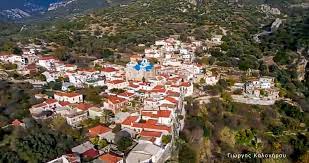
Skoureika is a traditional village located in southern Samos, nestled at the foothills of Mount Bournia, a branch of Mount Karvounis, at an altitude of 181 meters. It borders:
📍 North: Neochori
📍 East: Spatharaioi
📍 West: Koumaeika
🏞️ Geomorphology & Water Sources
The village is built in a natural depression on the mountain slope, between two ravines:
The terrain is semi-mountainous and partly rocky, covered by dense forest vegetation alternating with olive groves. Several springs in the area, along with proximity to the Amphilyssos stream—the most water-rich stream on the island year-round—make the land highly fertile and suitable for irrigation.
Towards the coast, the terrain becomes flatter but also more arid.
🌳 Vegetation (with scientific names)
Skoureika falls within the Eu-Mediterranean vegetation zone (Quercetalia ilicis), specifically the Oleo-Ceratonion subzone, and is characterized by a rich variety of native species:
Turkish Pine (Pinus brutia)
Pubescent Oak (Quercus pubescens anatolica)
Holm Oak (Quercus ilex)
Mediterranean Cypress (Cupressus sempervirens)
Wild Olive (Olea sylvestris)
Carob Tree (Ceratonia siliqua)
Strawberry Tree (Arbutus unedo) and Greek Strawberry Tree (Arbutus andrachne)
Chaste Tree (Agnus vitex castus)
Terebinth (Pistacia terebinthus), Mastic Tree (Pistacia lentiscus)
Judas Tree (Cercis siliquastrum)
Kermes Oak (Quercus coccifera)
Wild Pear (Pyrus spinosa)
Service Tree (Sorbus domestica)
Pink Rockrose (Cistus creticus), Tree Heath (Erica arborea)
Bay Laurel (Laurus nobilis), Myrtle (Myrtus communis), Oleander (Nerium oleander)
🌤️ Climate
Skoureika has a subtropical Mediterranean climate:
Rainfall distribution:
Prevailing winds:
🏛️ History
The village is named after Georgios Skouras, a wealthy settler who purchased the land in the early 17th century for 40 grosia.
The oldest documented reference is a 1718 inscription on an icon of Saint George reading:
🖋️ “Prayer of the servant of God G. Skouras, 1718”
There are also signs of ancient habitation, including:
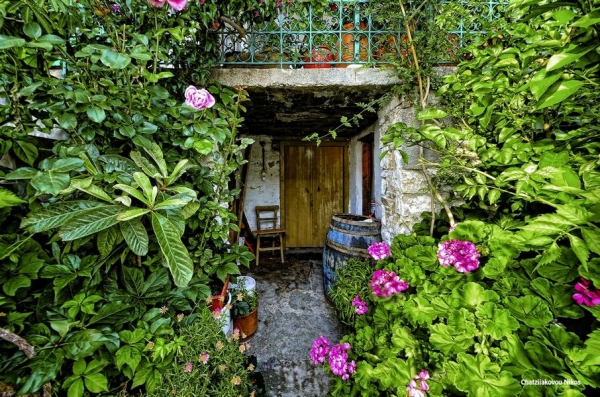
Traces of ancient structures in the Dritzareika area
Remains of a manmade harbor
A nearby carved cave with two ancient tombs
🧑🌾 The Village Today
🏡 Approx. 105 homes
👥 Population: formerly 600, now about 120
Occupations: agriculture, retirees
Main products:
🏖️ Coastal Settlements of Skoureika
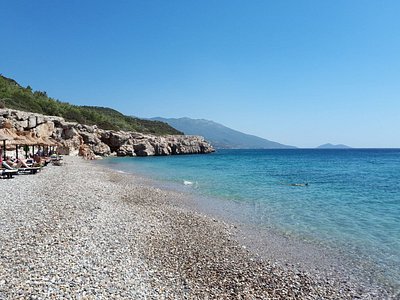
The greater Skoureika region includes several seaside spots:
🌿 Pefkos
🏖️ Kambos Beach
🏝️ Psili Ammos
🌊 Peris Beach
⛪ Church of Saint George
The parish church of Saint George is a majestic stone-built temple in Byzantine cross-in-square style with a dome, designed by French engineer Dibre.
🔨 Built: 1920–1922 by local villagers
🕯️ First liturgy: Holy Wednesday, 1922
✝️ Consecration: April 23, 1933, by Metropolitan Eirinaeos
Transferred elements from the old church (1800–1920):
Wooden templon (donated to the Monastery of the Holy Cross)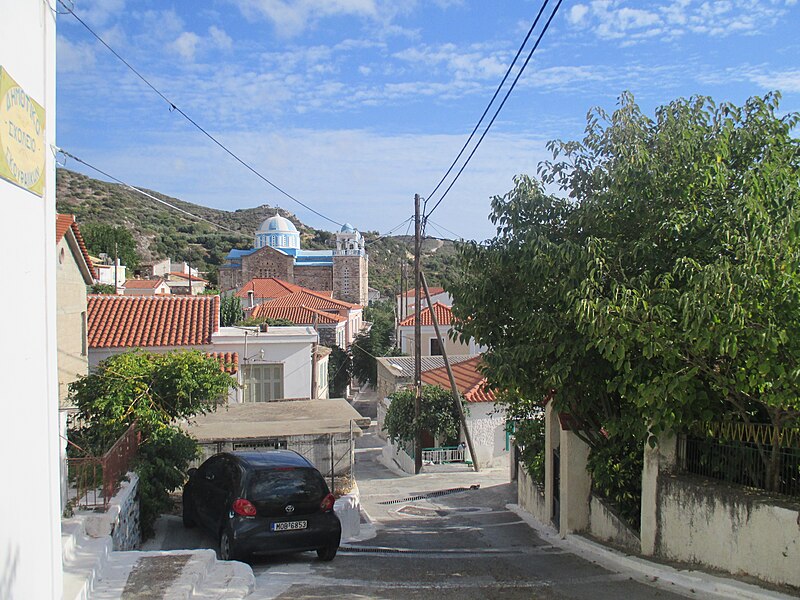
Throne, pulpit, iconostasis
Historic icons, bronze lanterns, chandeliers, silver fans
📿 Most important icon:
🍲 Tradition – The "Keskeki" Custom
Each year on the feast day of Saint George, villagers revive the ancient custom of “keskeki”:
A ritual communal dish of goat and wheat, slow-cooked overnight and served to everyone, symbolizing unity and heritage.
⚓ Historical Port Function
In earlier times, Skoureika’s coastal zone functioned as a key local port, with warehouses used for the trade of goods across Samos and neighboring islands like Ikaria, Fournous, Patmos, and Lipsi.
Today, the area offers rental accommodations, ideal for visitors seeking authentic, off-the-beaten-path experiences.



Add new comment