
Pyrgos of Samos
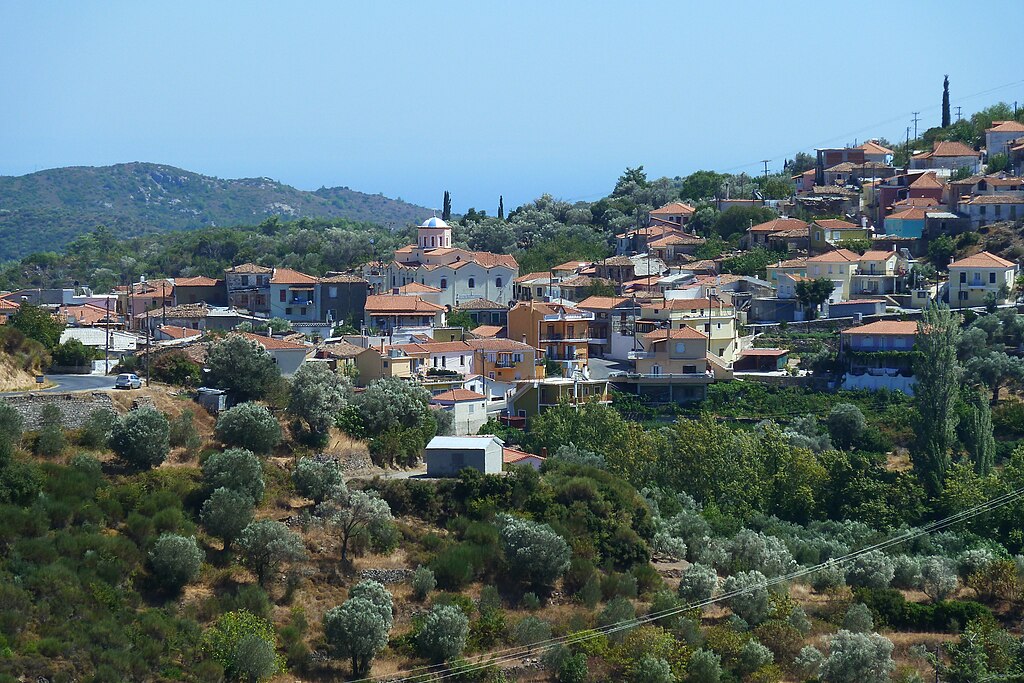
🏞️ Pyrgos of Samos
Pyrgos is a village on the island of Samos, administratively belonging to the Municipality of East Samos in the Regional Unit of Samos.
📍 Location & Description
Pyrgos is a mountainous village in southern Samos, built at an altitude of approximately 400 meters, nestled among lush hillsides and ravines filled with plane trees. It is located about 20 km from Pythagorio and 22 km from Karlovasi, placing it roughly at the center of the island—yet in a quiet, rural area with a deeply traditional atmosphere.
The village is surrounded by cultivated land, olive groves, vineyards, and forests. Just outside the village rises the pine-covered mountain range of Karvounis (also known as Ampelos), forming a landscape of authentic, unpretentious island nature.
Pyrgos is not a tourist destination in the conventional sense—and that is precisely its charm. It offers an “inside” experience, far from the crowds, for those seeking the true soul of the island through its people, its quiet coffee houses, and its narrow alleyways.
Most of the residents are engaged in agriculture, animal husbandry, and wine production. The pace of life remains slow, with time itself seeming to pause when you sit under the plane tree in the village square.
📜 Historical Identity
Pyrgos is one of the oldest villages in Samos, with its founding estimated—based on oral tradition and indirect sources—to date back to the late 17th or early 18th century. The settlement developed primarily by residents of the island’s southern coasts, who sought a safer inland location due to pirate raids that plagued Samos until the 18th century.
Its name likely derives either from a defensive tower (“pyrgos” in Greek) that may have once stood in the area, or from the very morphology of the land itself—a “tower” of earth between ravines and hilltops.
During the period of Samos’ semi-autonomous Principality (1834–1912), Pyrgos experienced a phase of modest prosperity. The village's agricultural output—mainly olives, grapes, wine, and grains—supplied the surrounding region. Many locals also worked as craftsmen or small-scale traders. Historical accounts mention the operation of a school, a traditional olive press, and a communal fountain which served as a central meeting point and hub of daily life.
Pyrgos played a notable role in the wars of the 20th century, with many of its inhabitants participating in the Macedonian Struggle, the Balkan Wars, and the Asia Minor Campaign. During the Occupation (1941–1944), the village became a refuge and a passage for resistance fighters, thanks to its strategic mountain location.
Like many mountainous villages in Greece, Pyrgos experienced a gradual decline in population after the war, due to migration to Athens, the United States, and Australia. Nevertheless, the bond between the village and its diaspora remains strong—and every summer, Pyrgos comes back to life.
Today, Pyrgos stands as a quiet cradle of memory and authenticity, where history isn’t just written in books—it’s etched into the stones, the weathered doors, the smiles of its people, and the aroma of freshly baked bread.
👀 What to See in Pyrgos
Pyrgos isn’t a village with “sights” in the conventional sense. The village itself is the attraction. Yet, if you wander through it attentively, you’ll discover small treasures that piece together the puzzle of its everyday life:
⛪ Church of Saint John the Theologian
The central church of Pyrgos, dedicated to Saint John the Theologian, dominates the village square. It’s simple, stone-built, with a charming bell tower and a harmonious presence in the landscape. Every year on September 26, the saint’s feast day, locals and expatriates gather here for a festive liturgy and village celebration.
🌳 The Square & the Plane Tree
The heart of the village life beats in its square, where a large plane tree spreads its shade. This is the meeting point for everything—conversations, coffee, news, laughter, and traditions. The village café still operates here, remaining the social nucleus of Pyrgos to this day.
💧The Fountain – An Old Meeting Spot
A short walk from the square brings you to a stone-built fountain with fresh flowing water, once the village’s main water source. Locals still call it “to Neraki” (the Little Water), and countless everyday stories have unfolded around it.
🧱 The Old Houses & Alleyways
As you walk through the heart of the village, you’ll come across homes built in the traditional Samian architectural style: stone, wood, tiles, small balconies, and lovingly tended courtyards. Some have been carefully restored, while others remain partly ruined—whispering their history through timeworn doors, each one a piece of art in its own right.
🥾 Trails to the Mountains & Nature
Pyrgos is an ideal base for nature walks and hiking. Several trails begin here, winding through hills and ravines. One popular route leads to the spring of Kallithea, a beautiful natural spot with fresh water, shade, and serenity. Another, more demanding path ascends to the summit of Mount Karvounis, perfect for experienced hikers.
🌿 Daily Life in Pyrgos, Samos
Pyrgos today is a small, vibrant, yet peaceful place. It’s not a postcard village—it’s a real village, where life flows at the pace of another time. Mornings begin with the scent of firewood burning in hearths and ovens. Residents step out onto their porches, water their flowers, gather greens, or head to the fields.
Farming and livestock remain the main livelihoods. The grape harvest in autumn is still a collective task, as is the olive picking. Every season has its chores, its rhythms, its quiet joys and labors.
The village café remains a daily meeting point—where men and women, mostly older, gather to exchange news, play backgammon, or share a coffee and a story. The younger generation—few but full of life—return during the summer or on weekends, keeping their roots alive.
The village has a sense of resistance to time. Speed does not reign here, but rather observation. Noise does not dominate, but conversation with the land. People greet you, ask who you are, where you’re from, what you’re looking for. Pyrgos is a village that remembers you—even if you visit just once.
In summer, Pyrgos comes alive. The diaspora returns, houses reopen, courtyards fill with voices and sizzling grills. Nights are full of stars, quiet conversations, and a deep sense that here… you have nothing to prove.
Pyrgos isn’t a touristic destination—but it is a place for those seeking authenticity, simplicity, and human warmth. A village that doesn’t “show off”—but gently welcomes you in.
🎉 Festivals, Celebrations & Local Traditions
Although small and quiet, Pyrgos knows how to celebrate—in its own authentic way. No loudspeakers, no fuss—just depth, connection, and emotion.
✝️ Feast of Saint John the Theologian (September 26)
The most significant religious and social event in the village. On the day of the patron saint’s feast, the church fills with locals and expatriates. The liturgy is deeply traditional, followed by a procession and communal feast prepared by the villagers and laid out in the square.
In the afternoon, a small traditional celebration takes place, with kanonaki, violin, and lute, dancing in the square, and wine from local barrels. It’s a day full of emotion—not only for its religious meaning, but for the reunion of the community.
🕊️ Resurrection Night & Easter
Easter in Pyrgos is pure and heartfelt, far from touristy folklore. On Holy Saturday, the entire village gathers at church with lit candles. After the Resurrection, the courtyards fill with the aroma of red wine, “magiritsa” soup, and firewood.
On Easter Sunday, family tables are set in yards and gardens with lamb on the spit, Samian pies, and music that begins with tradition and ends… wherever the heart leads. Often, musicians from other villages or returning locals join in with instruments—and the dance carries on well into the night.
🍇 Grape Harvest & The Unofficial Wine Festival
There’s no formal "wine festival" with banners or stages in Pyrgos, but September is a celebration in itself. Families gather grapes, press them in the old-fashioned way, and the scent of grape must fills the air. Guests are always treated to homemade wine, invited to help with the pressing, and may even hear a Samiot folk rhyme or two.
💫 Customs & Quiet Traditions
Pyrgos keeps humble, daily traditions that aren’t written down—but handed down:
Sunday morning coffee at the café, always with someone reading the newspaper out loud.
Women gathering in courtyards to embroider and chat in summer.
The lighting of oil lamps in remote chapels—by someone who’s made a personal vow never to let them go dark.
Stories about “the old days” shared over a glass of wine and a slice of tomato with salt.
Pyrgos might not fill pages in travel guides—but it’s rich in living tradition. Not something to photograph, but something to feel. Not to post about, but to carry with you.
🛎️ Practical Info & Tips for Visiting
🚗 Getting There
Approximate distances:
20 km from Pythagorio (via Chora and Mesogeio)
22 km from Karlovasi (via Koumaika and Kontakaiika)
17 km from Samos Airport
The roads are paved but winding—especially on the Karvounis side. Drive slowly and enjoy the ride. Pyrgos is best approached without haste.
🅿️ Parking
There’s no designated parking lot, but you can park freely near the village entrance or by the square. In August, a little patience might be needed.
🥾 What to Wear & Bring
Comfortable shoes for walking on cobbled or dirt paths
Water and a hat if you plan to hike to a spring or chapel
A camera or phone: Pyrgos doesn’t have “Instagram spots,” but it has shadows, doors, and courtyards that speak
In winter, it gets chilly—especially at night. The mountain looms just above, and you’ll feel it.
🍽️ Food & Coffee
The village café also serves as a mini taverna, mainly in summer.
You might find homemade dishes, meze, or even a local spoon sweet.
If you're lucky, a local might treat you to wine, fresh figs, or a slice of watermelon—no words needed.
📅 When to Go
Spring: Flowering fields, crisp air, and greenery everywhere. The village wakes you with birdsong and lulls you to sleep with goat bells.
Summer: Warm, but not stifling. The diaspora returns and the village fills with life. Perfect time for socializing and long evenings in the square.
Autumn: Harvest time, mountain colors, smoke curling from courtyards, and grape presses at work. A quiet celebration with no decibels.
Winter: Solitude, silence, and few people—but rich in depth. If you love peace, you’ll fall in love here.
💡 Insider Tips
✅ Don’t just drop by. Walk the village, sit in the square, talk to people. Pyrgos doesn't show you what it is at first glance.
✅ Find an elder. Ask for the village stories. You might hear about forests, wolves, ghosts—or just how they store their wine in the press.
✅ Don’t expect amenities—expect hospitality. What it lacks in luxury, it makes up for in humanity.
✅ Take something with you. Not something you buy—but something you feel. A word, an image, a moment. Something that smells like bread, earth, and basil.


Add new comment